
12 Ways to Flip Any Mood Instantly

In this article, we will learn how to control mood instantly and make our emotions strong and stable in any situation.
Many times, you might have noticed great speakers using the word ‘mood swing’. This word means that the person has a weakness in handling their emotions and stabilising them. Nowadays, so many people’s moods are like thin glass; when dropped, they shatter into pieces, and it is very difficult to return to their original state of mind. In this article, we will discuss how we can solve this issue and make our mood strong and stabilised.
When Does Your Mood Fade Up?
A person’s mood fades at different times because we all handle emotions in our own way, shaped by what we go through in life, but among them, a few things are common.
- Expectations not met
- Ego clash (disrespect, insult and comparison)
- Plans fail or get delayed
- People do not behave as expected
- Physical fatigue, hunger and lack of sleep
- Replaying past mistakes or wounds
- Fear or anxiety about the future
- Excess negative input(news, social media and gossip)
- Unfulfilled desires
Why does your mood fade?
In the previous question, we discussed the situations in which your mood might fade. In this question, we will see the psychology behind the fading of our moods. The core reason for your fading mood is ‘Story Addiction’. In this era, though there is the existence of addiction towards intoxicants, there is a new kind of addiction towards stories.
Understanding this concept is the first step in learning how to control mood instantly and avoid unnecessary emotional suffering.
Making stories out of what is happening to us. Primarily, demotivating stories.
For example, when you call someone, and he does not pick up the call, you might probably make false stories in your mind that he does not like you or that he does not respect you.
Most of the people in this world are victims of this addiction. You cannot stop the mind from creating stories; you can choose empowering stories.
“Situation does not disturb Mood, Interpretation disturbs Mood”
To come out of this addiction, we have to take three simple actions:
- Ask: What happened?
- Then ask: What story am I adding?
- Drop the story.
We will take the snake above example.
When you call a person, and he does not answer.
The story is simple: the other person did not answer the call.
The story we add is that he does not respect me, he ignores me, etc.
After you realise that the story you made is demotivating, and to begin with, the story did not even take place!
What is the cost of Mood Fade–Up?
This question will help you realise why overcoming this mood fluctuation is very important. There are a few practical examples to help you understand this exactly.
| Situation | If the mood is off | Practical Costs |
| In the workplace, office or meeting | Short temper Poor listening Defensive reactions |
Bad decisions Team conflicts Missed opportunities Loss of trust from seniors or clients |
| While making important decisions | Emotional bias Impulsive reactions Fear – based choices |
Regret later Financial loss Broken commitments Long-term damage |
| Addressing a gathering or Public speech | Voice lacks power Words lack conviction Audience disconnects |
The message fails to inspire. Listeners disengage Influence reduces Credibility weaknesses |
| During a festival or celebration days | Complaints instead of gratitude Mechanical rituals No inner connection |
Spiritual opportunity lost Heart remains dry Festival becomes formality |
| Inauguration Ceremony | Lack of enthusiasm Mechanical participation Negative body language |
Poor first impression Auspicious energy disturbed Team morale drops Opportunities for blessings get wasted |
| Family Function or Gathering | Face looks dull, irritated, and sunken Cold response to guests Small issues feel big. |
Guests feel unwelcome Relatives remember behaviour, not decoration. The reputation ofthe family suffers Once in a lifetime joyful moment is lost forever |
| At Home with family | Harsh words Silent anger Emotional withdrawal |
Children feel unsafe Spuse feel neglected Trust weakness Home loses peace |
| When someone needs emotional support | Lack of empathy Wrong words Impatience |
Relationship damage Missed a chance to heal someone Guilt later |
If we understand these consequences clearly, we realise why it is important to learn how to control mood instantly in daily life.
How to Control Mood Instantly: 12 Practical Ways
1. Splash Cold Water or Take a Cold Shower
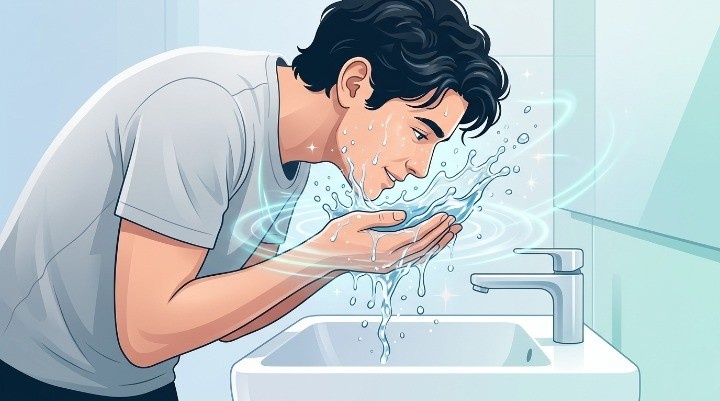
- Cold water shocks the nervous system, resets hormones, and breaks emotional loops.
- Cold water cools not just the body – it cools the mind, too.
2. Play sports or Running & Exercise

Physical activity is one of the fastest ways to control mood instantly because it directly changes body chemistry.
- Change Activity ➡️ Change Chemistry ➡️ Change Mood
- Movement clears emotional toxins.
- If emotion is stuck – move the body!
3. Walk in Nature

- Fresh air resets rhythms
- Nature naturally stabilises mood.
4. Engage in Seva activity
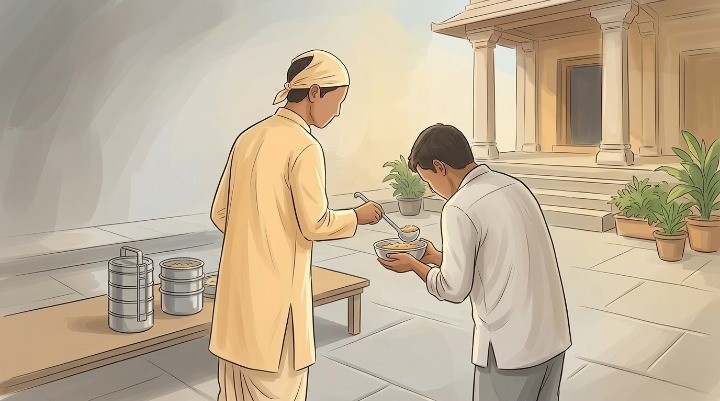
- Seva dissolves sadness
- Nishkam seva of god & saints is the best Mood Changing Therapy
During Utkarsh Shibir, one of the swamijis had the opportunity to ask Mahant Swamiji a personal question. He wanted to know how Mahant Swamiji managed his emotions when Shastriji Maharaj, whom he considered his parents, departed for Akshardham. Mahant Swamiji explained that on hearing the news, he went completely blank. At that time, he was serving as the hostel in-charge at Rajkot Gurukul, so he immersed himself fully in all the sevas available to him there to steady his mind and heart.
5. Engage in Devotional Activity
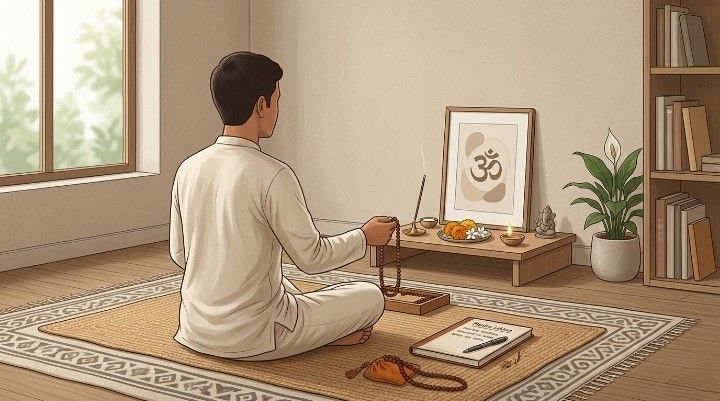
- Performing devotional acts like mala or mansi puja while keeping the body and back straight naturally influences brain chemistry, calming the mind and uplifting the mood.
- When Ego melts, Perspective returns. Let it Melt!
- Do Chanting / Mantralekhan / Pradakshina / Dandvat
6. Read Scriptures or Good Books
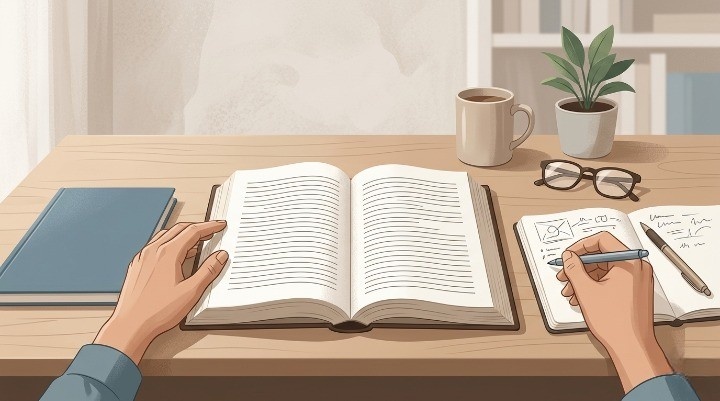
- Scriptures work best in crisis.
. - Powerful Thoughts create Powerful Mood.
7. Listen to the words of Satsang
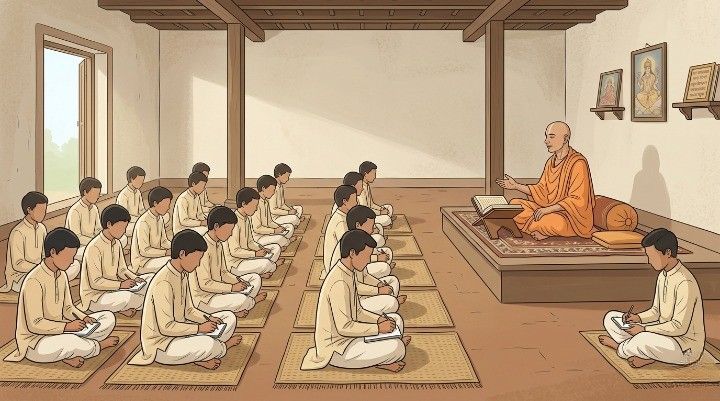
- Borrow the strength of the soul (Satsang) until yours returns.
- Words of saints recharge the soul.
8. Accept mistake & Seek Pardon

- Unaccepted Guilt Drains Energy & Mood
- Acceptance heals faster than excuses!
9. Ask: What’s possible now?

- This question shifts from Victim to Creator.
- Think of possibilities out of a problem.
10. Set a powerful “SELF IMAGE”!

- Change Identity, Change Mood
- Mood always follows identity!
Your self-image determines your reactions in every situation.
When you see yourself as calm, disciplined, and strong, your mood naturally follows that identity.
11. Remember your Highest Goal

- Goal alignment corrects your goal instantly.
- Big goals silence small problems.
The last one is like the master key for flipping the mood instantly, and that is:
12. Separate: Happening v/s Story
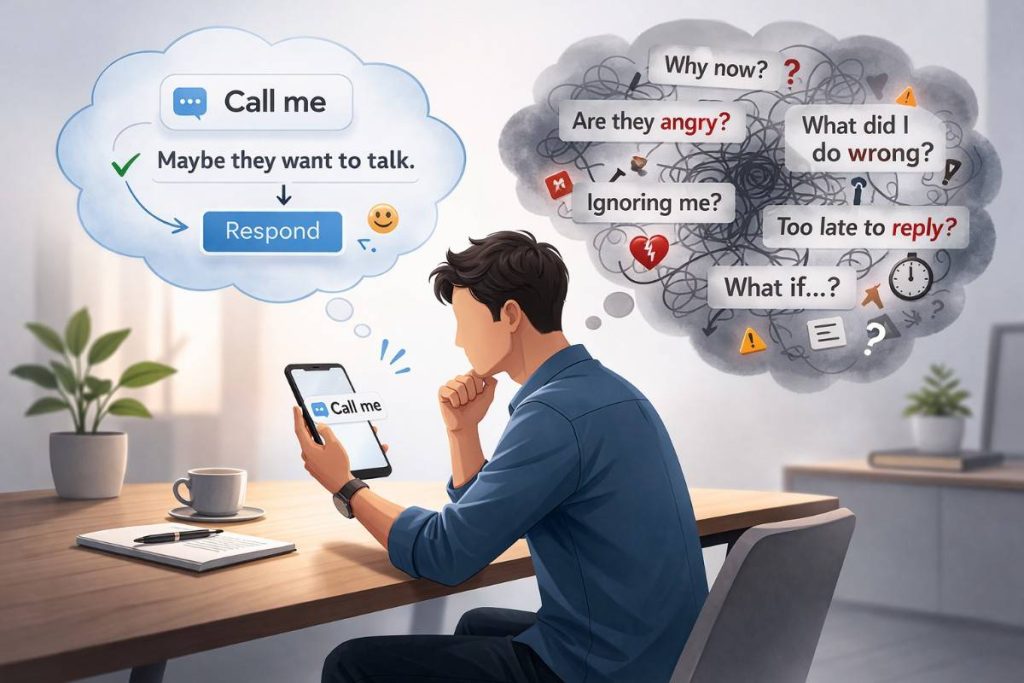
- Event is neutral, Story creates SUFFERING!
- Drop the demotivating story from the event.
Conclusion:
Mood does not change because of situations; it changes because of the stories we attach to them. When we learn to separate what is happening from what we are imagining, emotional stability naturally returns. A stable mood is essential, as it directly affects our decisions, relationships, performance, and inner peace.
By practising these simple yet powerful techniques, we shift from being victims of circumstances to creators of our state of mind. Small conscious actions can instantly transform our emotions. When mood is mastered, life becomes calmer, clearer, and more meaningful.
When we apply these techniques regularly, we naturally learn how to control mood instantly and maintain emotional stability.
Frequently Asked Questions(FAQ’s)
1. How can I control mood instantly in difficult situations?
To control mood instantly, focus on changing your physical state—such as taking deep breaths, moving your body, or shifting your attention away from negative thoughts.
2. Why do mood swings happen so frequently?
Mood swings often occur due to unmet expectations, overthinking, stress, lack of sleep, or emotional attachment to certain outcomes.
3. What is the fastest way to control mood naturally?
Simple actions like cold water exposure, exercise, or going for a walk can help control mood quickly by changing your body chemistry and mental focus.
4. How does overthinking affect emotional stability?
Overthinking creates unnecessary negative stories in the mind, which can disturb emotions and lead to stress, anxiety, and mood fluctuations.
5. Can spiritual practices help control mood?
Yes, practices like prayer, chanting, reading scriptures, and seva can help control mood by calming the mind and improving inner stability.
6. How can I stay calm when things don’t go as planned?
Focus on accepting the situation, adjusting your perspective, and asking “What can I do now?” instead of reacting emotionally.
7. Is it possible to control mood without external help?
Yes, by becoming aware of your thoughts and consciously choosing your reactions, you can gradually learn to control mood without depending on external factors.
8. What is the biggest mistake people make when trying to control mood?
The biggest mistake is trying to control external situations instead of managing internal reactions and interpretations.
The Power To Defeat Kali!
Defeat Kali Yuga is a question many people ask: “Until Lord Kalki comes to defeat Kali, what power do ordinary...

Divorce With Onion and Garlic!
Before we start, give a thought to yourself: when does a person decide to divorce their spouse? When they realise...
12 Ways to Flip Any Mood Instantly
In this article, we will learn how to control mood instantly and make our emotions strong and stable in any situation. Many...

Ugadi Pachadi: The Six Flavours of Life
The Beginning of Ugadi Every year, Ugadi arrives like a breath of fresh air. Homes are cleaned, doors are decorated...

He Rejected the Status Quo. He Chose Panch Vartman over Popularity
Living with values is not a burden… It is a superpower Churanta Mondal – Cybersecurity Engineer – Sophos | Proud Alumnus of...
The Authentic Ways to Utilise the Law of Attraction
The Law of Attraction is a fundamental principle stating that “like attracts like.” Positive thoughts and actions attract positive outcomes, while negative...

Conceptions of War: Is it Violence or Welfare?
Righteous war in Hinduism is a complex concept that raises an important question: is war merely an act of violence,...
The Regret Free Life Formula: Simple Truths Most People Realize Too Late
Living a regret free life begins with understanding the deeper purpose of our human existence and preparing for the...

Holi and Holika Dahan: Real Meaning, Story & Significance
Holika Dahan There is a story related to Holika Dahan, which is why we burn the Bonfire. In many videos, you might...

Hanumanji’s Compass: 12 Directions for a Meaningful Life
If we go through the life of Hanumanji, then we can find a lot of inspiration and a lot of...